Forex Trading Simulators: Introduction

Many traders choose a simulated trading environment before entering the actual forex market. Forex trading simulators provide a risk-free platform for developing confidence, grasp market dynamics, and practice strategies. These instruments enable traders to improve their abilities without going through actual risk by simulating real-world trading environments.

What are Forex Trading Simulators?

Forex trading simulators are sophisticated software systems meant to simulate the conditions of the foreign exchange market, therefore enabling traders to practice trading free from the financial risk connected with actual trading. With real-time market data, these simulators create a virtual environment where users may run trades, examine market data, and create trading plans. Forex trading simulators are important tools for both new and seasoned traders by mimicking real trading situations.

Understanding Forex Trading Simulators

Simulations of forex trading let consumers trade in a risk-free environment. Live price feeds, charts, and trading tools are among the resources they usually provide that reflect actual market conditions. This lets traders get confidence and experience before joining the live market. These simulators mostly aim to enable traders grow their abilities, test methods, and grasp of market dynamics without regard to actual loss of money.

Does the simulator mirror the real market environment?

Real-time market data on a platform best for learning Forex and stocks online will enable you to closely monitor market swings. This information helps you to see how trade opportunities change over time. As a day trader or scalper, you can observe how even minutes could influence results; as an intraday trader, you can evaluate the effect of keeping a position for another day. With price swings just like those in the market, a trading simulator reflects actual account performance except you are using virtual money. Effective learning depends on trading using live data; without it, your decisions might not represent actual market activity, thereby restricting your progress and skill development.

Example of Forex Trading Simulator

Forex trading simulators are key tools for traders to refine their abilities and test methods in a risk-free environment. These are five best forex trading simulators together with their advantages.

  1. MetaTrader 4 (MT4)

Leading trading tool in the forex market, MetaTrader 4 is well-known for its simple interface and wide range of capabilities. Real-time market data and charts provided by MetaTrader 4 (MT4) let traders practice under actual circumstances. The platform offers automated trading with Expert Advisors (EAs) therefore improving trade efficiency by means of technical analysis tools for strategy testing.

  1. TradingView

Renowned for its sophisticated charting tools and paper trading function, TradingView is a web-based tool. For thorough market analysis, TradingView offers sophisticated charting with many chart types and indicators. Through letting traders exchange and talk about techniques inside its community, the platform promotes group learning. Custom alerts on particular price points or indications also help users optimize trading plans.

  1.  Thinkorswim by TD Ameritrade

Strong platform Thinkorswim provides both FX and option traders with a complete paper trading capability. Thinkorswim provides in-depth analysis for well-informed decision-making by means of wide research tools. By means of their customizable interface, traders can personalize their workspace and therefore fit the platform to their particular requirements. The platform also includes risk management strategies such stop-loss orders, therefore enabling traders to properly control possible losses.

  1.  NinjaTrader

Designed for FX and future traders, NinjaTrader is a software with a free simulation mode. Advanced charting and analytical tools from NinjaTrader give clever approaches for market research. Its market replay tool lets traders go back over former market situations, therefore facilitating practice in those conditions. The platform also offers strategy building, thereby enabling traders to construct and test strategies meant to improve their trading performance.

  1. Forex Tester

Software meant especially for forex trading, Forex Tester lets users replicate deals using past data. Forex Tester lets traders replicate past performance, therefore testing methods in many market environments. Customizing the simulation speed helps to enable thorough transaction analysis. The program also offers thorough performance analytics, complete reports for assessing and improving trading plans.

Advantage Of Trading Simulator?

Supported by examples to show their advantages, these are some main reasons to use trading simulators. 

1. Risk-Free Learning Environment

Trading simulators have one of the most important benefits since they provide traders with a risk-free environment where they may study and hone their skills. Without worrying about losing actual money, new traders can play about with several techniques. A new trader could wish to test a scalping approach, for instance, whereby fast transactions are made to profit on minute price swings. By means of a simulator, individuals can hone their technique and implement this method free from the financial repercussions of a lost deal. 

Example

Suppose Sarah, a rookie trader ready to join the forex market but worried about the risks involved. She chooses to hone her abilities on a trading simulator. Without jeopardizing any of her savings, Sarah examines several techniques—including trend tracking and breakout trading—over a few weeks. She starts to grasp the nuances of the market as she grows confidence and experience, therefore arming her for actual trading. 


2. Realistic Trading Experience 

Forex trading simulators replicate real market conditions, thereby offering a reasonable trading experience. Live market data, charts, and trading tools let users exercise their ideas in an environment quite similar to live trading. This exposure enables traders to grow familiar with the trading platform and strengthen under pressure their decision-making abilities.

Example

Suppose John, a trader who has been spending some months using a trading simulator. The simulator lets him place trades exactly as he would in a live environment and offers real-time statistics. Thanks to his great experience in the simulator, John feels at ease negotiating the trading interface and making decisions depending on real-time market conditions when he eventually moves to live trading. 


3. Strategic Development and Testing 

Before using any trading strategy in the real market, simulators let traders create and test several ones. Analyzing the success of several techniques over time helps traders find which one suits them the best. When trading actual money, this iterative process of testing and strategy improvement can result in more informed decisions. 

Example

Alex, a trader, would like to create a new trading plan grounded on technical indicators. Over several weeks, he verifies his approach using a trading simulator, tracking performance under multiple market scenarios. Alex finds, after looking over the data, that his approach works best during the London trading session when volatility is greatest. This realization helps him to maximize his strategy and raise his chances of success once live trading start.

4. Building Confidence 

New traders may find joining the forex market frightening. By letting users practice their abilities and view the outcomes of their trades without risking their funds, trading simulators help build confidence. Traders are more likely to start live trading with a good attitude as they get more at ease with their approaches and decision-making procedures. 


Example

Novate trader Lisa starts honing her trading techniques using a trading simulator. She first finds it difficult to decide and control her feelings during deals. She starts to see consistent results, though, following many weeks of simulator practice. Her confidence is raised by her success; when she finally moves to live trading, she is more ready and confident in her skills.

5. Learning Dynamics of Markets

Forex trading simulators give traders a great chance to learn about market dynamics, including how various economic indicators, news events, and geopolitical issues could affect currency values. Through simulated environment observations of different events, traders can have a better awareness of the elements influencing price fluctuations.

 
Example
Using a simulator, Michael, a trader, honed his trading amid major economic events including interest rate changes or Non-Farm Payrolls (NFP). Through tracking how these occurrences affect simulator currency values, he gains insight into expected market responses and changes his trading plans. When trading live, this information guides his decisions.

6. Performances Tracking

Performance tracking tools found in many trading simulators let users examine their trade data across time. Reviewing their win/loss ratios, average transaction length, and other important statistics helps traders understand their performance. Finding strengths and weaknesses from this information can be quite helpful for traders so they may modify their plans based on facts.

 
Example
Experienced trader Sophia makes advantage of a trading simulator including performance analytics. She looks over her performance data after a month of trading and finds that trading during particular market hours results in much greater win rate. Equipped with this knowledge, Sophia changes her trading plan to concentrate on certain times, therefore enhancing her general trading performance. 

Key Features Of Simulators

Here are some of the main characteristics that make trading simulations useful for both new and seasoned traders.

1. Real-time Market Data

The ability of trading simulations to acquire real-time market data is among its most crucial aspects. This lets traders, like in a live trading environment, practice making decisions depending on present market conditions. Live price feeds let traders see how money pairs change in real-time, therefore helping them to grasp market dynamics.

For instance, a trader using a simulator can monitor EUR/USD pair price swings during major economic events including Non-Farm Payrolls (NFP). Through tracking the instantaneous effects of these announcements on market prices, the trader can develop to predict market responses and modify their approach. 

2. User-Friendly Interface

Most trading simulators have simple interfaces that let users easily negotiate the platform. New traders who might not be familiar with trading tools and features depend critically on this accessibility. A well-designed interface facilitates users' concentration on learning and application of their techniques instead of on platform performance.

For instance, Emily, a new trader, can quickly access charts, indicators, and trading tools thanks to a simple architecture of a trading simulator. Her easy-to-use design lets her focus on honing her trading abilities free from overwhelming complexity.

3. Customizable Trading Settings 

Users of trading simulators can often adjust their trading settings—that is, leverage, position sizes, and risk management limits. This adaptability helps traders fit their personal trading techniques and preferences with their practice sessions. Those who wish to replicate particular trading situations will find especially helpful customizing.

For instance, David, a trader, would rather maximize his possible returns by using more leverage. He can modify the leverage levels in the simulator to match his desired trading style, thereby learning risk management strategies and knowing how leverage influences his trading results.

4. Educational Resources

Many trading simulators have instructional tools like tutorials, seminars, and papers covering several trading subjects. While using the simulator, these tools might enable traders enhance their knowledge and abilities. Beginners wishing to learn the foundations of trading especially benefit from access to instructional resources.

For instance, a rookie trader called Sarah makes use of a simulator providing a set of technical analysis video tutorials. She can use these tools to expand her knowledge of chart patterns and indicators as she develops her trading skills, therefore improving her whole performance.

5. Community and Support

Certain trading simulators have community features including chat rooms or forums where users may interact, network, and get guidance from others. Customer service is also usually accessible to help consumers with any technological problems or inquiries they could run upon. Talking with a community of traders can offer insightful analysis and create a conducive learning environment.

Michael, a trader, for instance joins an online community connected to his trading simulator. By means of this community, he shares his trading experiences, gains knowledge from others, and gets comments on his approaches. This cooperative setting enables him to develop as a trader and get assurance in his skills.

6. Performance Analytics
Trading simulators must provide a basic ability for performance tracking. Users can examine their trading records, check their performance indicators, and get understanding of their trading style. Finding strengths and weaknesses from this information can be quite helpful for traders so they may modify their plans based on facts.

For instance, Lisa looks over her performance metrics after a month of trading in the simulator and finds that trading within designated market hours results in much greater win rate. Equipped with this knowledge, she changes her trading calendar to concentrate on certain hours, therefore enhancing her general performance. 

Who Is Trading Simulator For?

The following are the main users and beneficiaries of a trading simulator:

  • New to the forex market traders would find trading simulators perfect. Without running actual money, they offer a secure environment where one may learn the fundamentals of trading, grasp market dynamics, and build basic abilities.
  • Simulators help even experienced traders as well. These systems help them to keep sharp and flexible by allowing them to test new ideas, improve current ones, and practice trading in several market scenarios.
  • Students studying trade, finance, or economics can use simulators as part of their course of instruction. Simulators can be included into courses to give students practical learning chances and improve their grasp of trade ideas.
  • Professional traders can test new trading systems or hone certain techniques using simulators before putting them into action in actual trading. This aids in the identification of possible risks and the best performance optimization strategy development. 
  • Trading simulators provide a means to investigate trading without financial risk for people reluctant to join the forex market because of the connected hazards. They can grow their trading talents at their own speed and get understanding of the market.
  • Simulators let hobbyist traders—those who trade for extra money or as a pastime—practice and hone their skills free from financial loss's weight. This helps individuals to reduce risks and yet enjoy the trading experience.
  • Simulators allow traders who are switching from other markets—such as stocks or commodities—to forex acquaint themselves with the special features of forex trading, including currency pairs, pips, and leverage. 
  • Investors seeking to investigate novel trading methods or tactics can utilize simulators to test their ideas in a controlled environment, therefore enabling them to assess efficacy before implementing them in active trading. 

Final Words

Finally, forex trading simulators are vital tools for traders of all stripes since they provide a risk-free environment in which to hone trading techniques. Through access to real-time market data, customizable settings, and performance analytics, these simulators let users create successful trading strategies and boost confidence before joining the genuine market. Trading simulators enable a thorough learning experience regardless of your level of experience—from novice wishing to learn the fundamentals to experienced trader trying new strategies. Using these simulators will help a trader greatly improve their knowledge and performance as the forex market develops, so increasing their chances of success in the competitive scene of forex trading. 

FAQ

Are Forex Simulators Reliable?

Forex simulators replicate trades using real-time or historical data, hence they are usually accurate in reflecting market circumstances. The accuracy derives from the capacity to replicate real market movements, which helps traders test methods under circumstances somewhat similar to live trading. Though they can simulate market behavior and price action, simulators might not completely reflect the emotional component of trading with actual money, which could influence decisions in live markets.

Are free trade simulations available?

Particularly those linked with well-known trading platforms like MetaTrader 4 and TradingView, many trading simulators are available for free. Usually featuring simple tools that let traders experiment without running actual risk, these free versions provide. Some sophisticated simulators or other tools, including in-depth analytics or extended historical data, can, however, call for a membership or one-time fee.
Forex Trading Books: Improve Your Technics

Forex trading can be complicated; hence, success in this field depends on a grasp of the nuances of the market. "Forex Trading Books: Improve Your Techniques" looks at key materials providing useful tactics, in-depth research, and tried-and-true methods to advance your trading ability. Helping both new and experienced traders refine their approach and increase their trading results; these books offer insightful analysis of market behavior, risk management, and successful trading techniques.

Why Forex Books are so Important?

These are a few reasons why anyone trying to be successful in trading currencies must have forex books.

1. Complete Understanding of Market Mechanics

Forex books present a systematic way of learning the principles of the foreign exchange market. Important for making wise trading decisions, they address basic ideas such as currency pairs, pips, spreads, and leverage. Reading these books helps traders understand how the forex market works, covering the elements influencing currency movements like market mood, geopolitical events, and economic indicators.

Books like "Currency Trading for Dummies" by Kathleen Brooks and Brian Dolan, for example, clearly introduce the forex market and enable novices to know how to negotiate it. Developing a good trading plan requires a basic awareness of this kind.

2. Development of Trading Strategies

Forex books offer mostly one advantage: their emphasis on several trading techniques. Many volumes offer thorough justifications of several techniques, including sentiment analysis, fundamental analysis, and technical analysis. Popular tactics such as scalping, day trading, swing trading, and position trading are teachable for traders.

For instance, Kathy Lien's "Day Trading and Swing Trading the Currency Market" describes particular techniques catered to various trading styles, enabling traders to select the method that fits their risk tolerance and market view. This diversity helps traders to modify their approaches depending on the state of the market.

3. Risk Management Techniques

Long-term forex trading success depends on good risk management. Forex books sometimes stress the need to control risk and offer doable strategies for doing so. Commonly taught are subjects include position sizing, setting stop-loss orders, and knowing risk-reward ratios. 

Books such as John J. Murphy's "Technical Analysis of the Financial Markets" go over trading techniques and stress the need for risk management in trade. Learning these strategies can help traders guard their cash and reduce losses—qualities vital in a volatile market.

4. Insights from Experienced Traders

Seasoned traders who share their experiences, observations, and lessons discovered from their trading paths write several forex books. Aspiring traders might find great value in these real-world viewpoints since they provide useful guidance and techniques absent from more theoretical sources. By learning from the achievements and mistakes of seasoned traders, novices can avoid typical traps and make more wise judgments.

For example, Mark Douglas's "Trading in the Zone" emphasizes the psychological elements of trading and offers advice on cultivating the correct successful attitude. This viewpoint is essential for traders trying to keep discipline in the face of market obstacles and enhance their performance.

5. Psychological Aspects of Trading

Good forex trading depends critically on trade psychology. Many forex books handle traders' psychological issues, including emotional decision-making, fear, and greed. Knowing these psychological elements enables traders to build the mental discipline required to follow their trading strategies and prevent rash decisions. 

Books such as Kathy Lien's "The Little Book of Currency Trading" stress the need to keep a disciplined trading approach and assist traders in developing the correct success-oriented attitude.

6. Continuous Learning and Adaptation

New trends, technologies, and techniques drive constant change in the forex market. Forex books are great tools for ongoing education since they let traders remain current on market events and modify their plans. Remaining competitive in the market depends on traders improving their knowledge and abilities, which they may do by routinely reading and analyzing fresh content.

7. Building a Strong Foundation

Forex books give a strong basis for beginners to develop their trading knowledge. They provide exact direction, starting with fundamental ideas and working toward more complex subjects. Those who might feel overwhelmed by the complexity of the forex market will find this structured learning method useful. Making wise trading judgments and creating winning plans depend on a good basis in forex concepts.

Top Forex Books

Here is the list of top 05 forex trading books every beginner and experienced must go through:

Currency Trading for Dummies by Kathleen Brooks and Brian Dolan

Kathleen Brooks and Brian Dolan's "Currency Trading for Dummies" is a thorough manual for anyone starting their forex trading adventure. Originally released in 2011, the book seeks to provide a good basis for newbies by addressing fundamental facets of currency trading. 

The writers start by introducing the fundamentals of the currency market, stressing its special qualities, and clarifying its players. They then explore the idea of currency pairings, breaking down their quoted values and discussing what influences their pricing. The book shows how several technical analysis instruments and indicators—moving averages, support and resistance levels, and chart patterns—might help traders make judgments. Additionally covered is fundamental analysis, with an eye on how central bank policies, economic data, and geopolitical events affect exchange rates. 


Each of the several trading techniques—which include scalping, range trading, and trend following—has benefits and drawbacks. The book also emphasizes risk management's need to provide trading position sizing guidance, stop-loss order assistance, and emotional control techniques. 

"Currency Trading for Dummies" tackles typical problems experienced by novice traders, including a lack of market information and the inclination toward emotional trading. It provides easily available tools to enable users to obtain strong knowledge of forex trading ideas and create successful risk management techniques to enhance their trading performance.

Trading in the Zone by Mark Douglas

First released in 2000, Mark Douglas's highly respected book "Trading in the Zone" explores the psychological aspects of trading with an eye toward perspective and discipline as fundamental components for persistent success in financial markets, particularly FX trading. Douglas claims that many traders struggle with emotional control and discipline, failing not because of a lack of technical ability but rather from He looks at the need to keep a well-defined trading plan, know and embrace risk, and have a strong trading attitude. The book emphasizes the discipline requirement to carry out a trading strategy successfully. It supports a probabilistic attitude, thereby enabling traders to see each trade as part of a greater statistical outcome rather than being unduly focused on individual results.

Emotional decision-making, uneven trading results, fear of loss, and overtrading—a few typical trading issues—are covered in "Trading in the Zone." Douglas provides techniques to go above these problems, such as redefining anxiety and avoiding emotionally driven, snap judgments. Dr. Alexander Elder has generally praised the book for its insightful analysis of trading psychology and useful application for enhancing trading performance.

The Little Book of Currency Trading by Kathy Lien

Published in 2011, Kathy Lien's "The Little Book of Currency Trading" is a great source for both new and seasoned FX traders. A renowned player in the forex trading scene, Lien seeks to streamline the complexity of currency trading and provide readers with useful instruments to thrive in the forex market. She addresses fundamental subjects, including the mechanics of money markets, including the running of currency pairings, market players, and trading times. Lien also looks at important economic data influencing currency values, including GDP, employment statistics, and inflation rates, enabling traders to forecast market changes. 

The book provides direction on reading charts, spotting trends, and applying several technical indicators, stressing the value of technical and fundamental analysis. It offers numerous trading techniques—scalping, day trading, swing trading—along with useful advice on properly applying each. The book spends much time on risk management, covering methods for establishing stop-loss orders, controlling position sizes, and protecting trading funds. 

Lien's book covers typical problems such as emotional decision-making, poor risk management, and lack of basic information among rookie traders. It provides simple explanations and useful recommendations as an easily available introduction to forex trading. Renowned trading psychologist Brett Steenbarger has complimented the book for its simplicity and pragmatic approach, which makes it a useful manual for traders trying to improve their forex market knowledge and ability.

Day Trading and Swing Trading the Currency Market by Kathy Lien

Published in 2019, Kathy Lien's "Day Trading and Swing Trading the Currency Market" is a complete manual on forex trading techniques emphasizing day trading and swing trading. Respected currency strategist Lien thoroughly analyzes these two trading strategies together with market dynamics, central bank policies, economic data, and geopolitical events influencing currency values.

Covering several day trading strategies like scalping, range trading, and breakout trading, the book explains their special qualities and how best to apply them. It also explores swing trading, stressing the discovery and use of medium-term trends using methods including trend following, counter-trend trading, and support and resistance level analysis.

Lien spends much of the book on risk management, emphasizing the need for position sizing, stop-loss orders, and control of trading mentality. She offers doable guidance on safeguarding capital and managing risk. The book also covers typical trading problems, including emotional trading, inadequate risk management, and lack of a disciplined approach, and it provides ideas and techniques to help one overcome these obstacles.

Technical Analysis of the Financial Markets by John J. Murphy

First released in 1999, John J. Murphy's "Technical Analysis of the Financial Markets" is regarded as a fundamental book for grasp of technical analysis in trading. Starting with the foundations of technical analysis, Murphy shows how price fluctuations reflect the market mood and how they can be seen using several charts and indicators in this powerful book covering key subjects.

Murphy teaches readers how to see important chart patterns such as head and shoulders, triangles, and flags, which can signal possible market changes and other chart forms, including line, bar, and candlestick charts. Examining a broad spectrum of technical indicators—moving averages, the relative strength index (RSI), and the moving average convergence divergence (MACD)—helps the author clarify how these instruments could confirm trends, spot reversals, and create trade signals.

With an eye on identifying bullish and bearish trends and the functions of support and opposition levels, the author stresses the need to know market movements and cycles. Murphy also covers the important element of risk management, providing direction on position sizing, stop-loss orders, and building a strong trading plan. Common trading concerns, such as problems in interpreting price swings, overreliance on fundamental analysis, and the limitations of emotional decision-making, are also covered in the book. Renowned traders such as Larry Williams have praised Murphy's work for its clarity and depth, noting it as a vital tool for enhancing technical analysis ability. 

Final Words

Forex trading books offer vital insights and techniques to improve trading ability. Works include "Currency Trading for Dummies" and "The Little Book of Currency Trading" which provide a basic understanding of money pairs, analysis, and risk management. Mark Douglas's "Trading in the Zone" emphasizes the psychological elements of trading—qualities essential for keeping discipline and controlling emotions. While John J. Murphy explores technical analysis approaches, Kathy Lien's "Day Trading and Swing Trading the Currency Market" offers doable trading ideas. Together, these tools provide traders with the necessary instruments to enhance their FX trading methods.

FAQ

Why it is Must to Study Forex Books for Success?

Success depends on reading forex books since they offer a disciplined knowledge of market dynamics, trading techniques, and risk control. These tools and knowledge enable traders to avoid typical mistakes in the erratic forex market and make wise selections.

What is the Most Famous Forex Books that Every Forex Millionaire Read?

Mark Douglas's "Trading in the Zone" is among the most well-known forex books every forex millionaire has read since it explores closely trading psychology and discipline. John J. Murphy's "Technical Analysis of the Financial Markets" is another important book since it thoroughly covers technical analysis techniques and tools.

Forex Market Hours: When To Trade

Effective trading depends on knowing the running hours of the F.X. market. Unlike conventional stock markets, forex lives five days a week, twenty-four hours a day. This global character brings opportunities as well as difficulties. By dissecting the trading sessions of the forex market, this article will enable you to identify the ideal moments to enter and leave deals.

What are Forex Market Hours

The worldwide dispersed forex market, sometimes known as the foreign exchange market, is used to exchange national currencies against one another. Operating five days a week, twenty-four hours a day, it lets traders engage in nearly any time currency trading. Traders trying to maximize their trading strategies and profit on market movements must first understand the F.X. market hours. 

Understand Market Hours

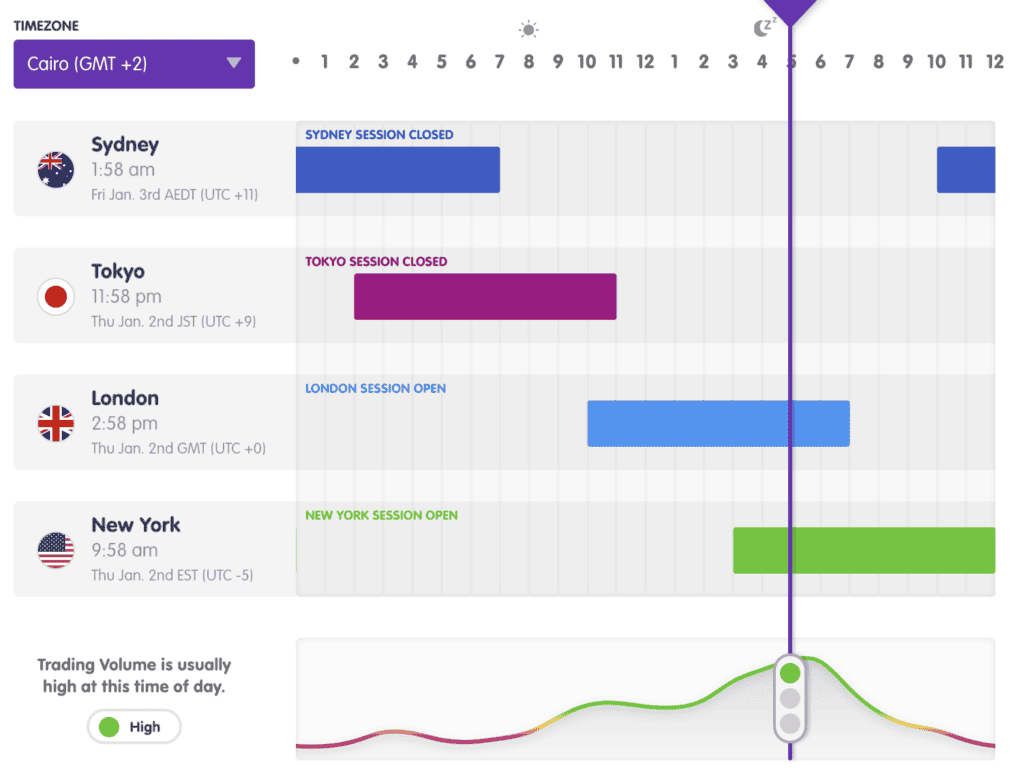
Four main trading sessions—the Sydney session, the Tokyo session, the London session, and the New York session—rule the forex market. Every session fits the business hours of key financial centers worldwide and overlaps at specific moments to provide chances for higher trade volume and volatility.

Sydney Session

Starting the currency market at 10 PM GMT, the Sydney session runs till 7 AM GMT. Being the first session open after the weekend, this one is quieter than others. Australian dollars (AUD), New Zealand dollars (NZD), and Japanese yen (JPY) are the main currencies exchanged this session. The Sydney session might be rather crucial for traders concentrating especially on the Asia-Pacific area.

Tokyo Session

The Sydney session ends; the Tokyo session starts at 12 AM GMT and runs till 9 AM GMT. Since this session crosses the end of the Sydney session and the start of the London session, it exhibits more volatility. Significant trading activity in the JPY and other Asian currencies defines the Tokyo session; hence, it is an important time for traders interested in the Asian markets.

London Session

The London session shuts at 5 PM GMT and starts at 8 AM GMT. Comprising a sizable share of daily trading activity, this is the most active and liquid trading session available on the forex market. Given that the London session crosses the Tokyo and New York sessions, it is well-recognized for its volatility. This period saw significant trading activity on major currency pairs, including EUR/USD, GBP/USD, and USD/JPY.

New York Session

The New York session starts at 1 PM GMT and runs until 10 PM GMT. This session crosses with the London session for a few hours, increasing volatility and trading possibilities. Trading the U.S. dollar (USD) depends especially on the New York session, shaped by news events from the United States and economic data releases.

How Forex Market Hours Can Affect Currency Pairs and Trading Volume

For traders, knowledge of forex market hours is essential since trading volume and currency pairs can heavily influence the time of day. These are some important considerations:

1. Increased Volatility During Overlaps

Particularly between the London and New York sessions, overlapping trading periods sometimes cause more volatility and have heavy trading volume. Larger price swings during these periods give traders profit opportunities. For important currency pairs like EUR/USD and GBP/USD, the junction of the London and New York sessions usually shows more activity.

2. Influence of Economic Data Release

Economic data releases often coincide with particular trading periods, influencing currency pairs. For example, U.S. economic figures, including the Consumer Price Index (CPI) or Non-Farm Payrolls (NFP), are normally released during the New York session. These announcements should be known to traders and their possible influence on the USD and associated currencies.

For instance, how might NFP Release affect USD/JPY

Excluding the farming sector, the NFP report is a fundamental economic statistic gauging the change in the number of employed Americans. Usually, it comes out during the New York session on the first Friday of every month.

Generally speaking, if the actual NFP figure surpasses market projections, it is considered as favorable for the U.S. dollar and the economy. Regarding USD/JPY, the USD will probably appreciate against the JPY since traders believe that a robust labor market would increase the Federal Reserve interest rate.

As traders respond to the news, the USD/JPY pair may show more volatility and trading volume during the NFP release. If the employment report reveals a notable rise, the USD/JPY pair may soar higher and overcome important resistance levels. On the other hand, should the news fall short of expectations, the USD/JPY could weaken as traders modify their bets.

3. Liquidity and Spreads

Liquidity changes during the trading day; the London and New York sessions have the most of it. Usually resulting in tighter spreads, greater liquidity helps traders enter and exit positions more economically. On the other hand, spreads could widen in the Sydney session because of less trading activity, raising trading expenses.

4. Currency Pairs Characteristics

Throughout several trading sessions, different currency pairs may show different patterns. For instance, pairs involving the AUD and NZD may notice more activity during the Sydney and Tokyo sessions; pairs involving the USD, EUR, and GBP are more active during the London and New York sessions. Knowing these traits will enable traders to select the best pairs depending on the time of day.

Forex Trading Session: Best Hours for Trade

Maximizing profit possibility and properly controlling risk depend on knowing the ideal times for F.X. trading. The F.X. market runs twenty-four hours a day, five days a week, divided into four main trading sessions— Sydney, Tokyo, London, and New York. Every session is unique and shapes trading volume and volatility. 

Overview of Forex Trading Sessions

1. Sydney Session

- Opening Time: 10 PM GMT

- Closing Time: 7 AM GMT

The Sydney session is the first to open after the weekend. Mostly impacted by the Australian dollar (AUD) and New Zealand dollar (NZD), it is rather quiet compared to prior sessions. Although this session usually sees less trading volumes, merchants concentrating on the Asia-Pacific area must find it vital.

2. Tokyo Session

- Opening Time: 12 AM GMT

- Closing Time: 9 AM GMT

Following the Sydney session, the Tokyo session witnessed more volatility since it crossed the end of the Sydney session. Along with other Asian currencies, this session uses the Japanese yen (JPY), a major tradeable currency. For traders looking at Asian markets, the Tokyo session is vital.

3. London Session

- Opening Time: 8 AM GMT

- Closing Time: 5 PM GMT

The London session is the forex market's most active and liquid trading time. It's great time for traders since it explains a sizable fraction of daily trading volume. This session sees notable trading activity on major currencies like EUR/USD, GBP/USD, and USD/JPY.

4. New York Session

- Opening Time: 1 PM GMT

- Closing Time: 10 PM GMT

The New York session overlaps the London session for a few hours, increasing volatility and trading possibilities. Trading the U.S. dollar (USD) depends especially on this session, shaped by news events from the U.S. and economic data releases.

Overlapping Forex Trading Hours

Traders trying to profit from more volatility and trading volume depend on the overlaps between sessions. The most prominent overlaps happen between the next sessions:

1. London and New York Overlap

- Time: 1 PM to 5 PM GMT

This overlap's great trading volume and volatility make it the ideal moment to trade. Major currency pairs like EUR/USD and GBP/USD have notable price swings during this period, giving traders many chances to enter and leave positions. Tighter spreads also define the overlap, making trading more reasonably priced.

2. Sydney and Tokyo Overlap

- Time: 12 AM to 7 AM GMT

Though not as important as the London-New York junction, the Sydney and Tokyo overlap offers trading prospects, especially for couples, including the AUD and JPY. Those concentrating on these currencies could find this period useful, particularly if they wish to profit from swings in Asian markets. 

Best Trading Hours for Specific Currency Pairs

During particular trading sessions, different currency pairs usually exhibit higher price swings. The optimal trading hours for different currencies are broken out here:

1. Major Currency Pairs

- EUR/USD: Best traded during the London and New York overlap (1 PM to 5 PM GMT) due to high liquidity and volatility.

- GBP/USD: Similar to EUR/USD, this pair is most active during the London-New York overlap.

- USD/JPY: This pair saw significant movement during the Tokyo session, and the London-New York overlap.

2. Asian Currency Pairs

- AUD/USD: Best traded during the Sydney and Tokyo sessions (10 PM to 9 AM GMT) as Australian economic data influence it.

- NZD/USD: Similar to AUD/USD, this pair is best traded during the Sydney session.

3. Exotic Currency Pairs

- USD/TRY (U.S. Dollar/Turkish Lira): Best traded during the London session due to the influence of European markets on the Turkish economy.

- USD/ZAR (U.S. Dollar/South African Rand): This pair was most active during the London session and was influenced by European economic data.

How to Trade with the Forex Market Time Zone Converter

Forex market time zone converters enable traders to properly schedule their trading actions depending on market hours. Here's how to apply it:

  1. Identify Your Local Time Zone

Find your local time zone and then link it to Greenwich Mean Time. This will let you know when several trading sessions start and end in your local time.

  1. Use a Forex market Time Zone Converter

Many internet tools and converters let you enter your local time zone and view the related currency market hours. These converters make Planning your trading activity easy by displaying the opening and closing times of every trading session in your local time.

  1. Plan Your Trading Strategy

Plan your trading strategy around the most active trading hours using the data the time zone converter supplies. To increase your chances of success, consider concentrating your trading efforts on overlapping sessions and major economic releases.

  1. Stay Informed About Daylight Saving Time

Know about changes in daylight saving time since they can influence market hours. Different areas change their clocks, which could affect the schedule of trade sessions. To guarantee the most correct information, routinely check the time zone converter.

FAQs

Does trading the best trading hours ensure success?

Though they don't ensure success, the finest trading hours can increase your possibilities by providing better market conditions and liquidity. Forex's consistent gains require a strong plan, discipline, and risk management beyond simple market timing.

How best should one trade the best trading hours?

Emphasizing high-volume currency pairs and utilizing a rigorous approach to risk management can help you trade at ideal hours. You can improve your chances of properly profiting from price swin using technical analysis and market trends during these periods.

Forex Currency Converter Why You Need One

Forex Currency Converter

Currency exchange rates constantly fluctuates in the field of forex trading. Both investors and traders depend on a forex currency converter absolutely indispensable. It offers real-time exchange rate data, which helps to enable correct estimates for possible losses or gains. Making wise selections in travel planning, foreign payment processing, currency trading depends on a trustworthy converter. 

How Currency Conversion Calculators Work

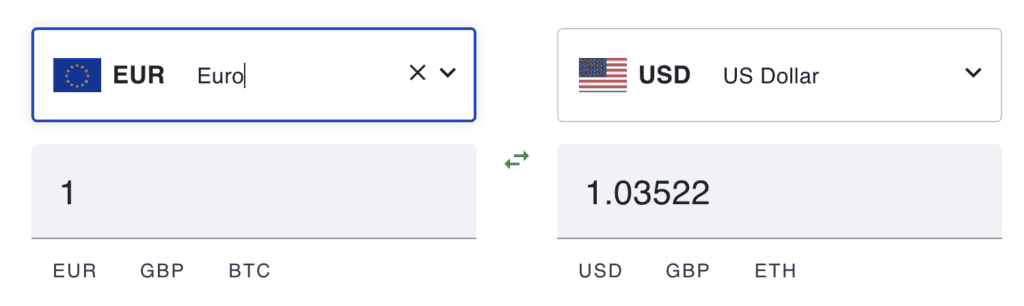
A currency conversion calculator is fundamentally based on the exchange rate, which shows the value of one currency in respect to another. For instance, 1 USD is worth 1.10 EUR if the US dollar (USD) to euro (EUR) conversion rate is 1.10. Usually finding this exchange rate data from banks or financial markets, currency conversion calculators guarantee customers have access to the most current rates.

The calculator multiplies an amount entered into one currency by the current exchange rate to provide the equal value in the intended currency. For example, the calculator will calculate the following if a user wishes to convert 100 USD to EUR using a 1.10 exchange rate:

100USD×1.10 EUR USD =110EUR

Users of this simple multiplication can rapidly see the value of their money in another currency. 

Examples of Currency Conversion Calculators

Among the most often used currency conversion calculators found online is XE. It lets consumers concurrently convert several currencies and offers real-time exchange rates. When a visitor wishes to convert 500 USD into other currencies, for instance, they can enter the amount and choose GBP, JPY, or AUD among the currencies they desire to use. Based on the most recent exchange rates, the calculator will show equal sums.

Another often used tool providing a currency conversion calculator is OANDA. It shows users historical currency rates, therefore enabling them to observe changes over time. A company could like to know, for example, how much 1,000 EUR was worth in USD six months ago. They can get the pertinent exchange rate and carry out the conversion by choosing the historical date in the OANDA calculator. 

Direct in its search engine, Google also provides a basic currency conversion tool. When users input a query like "100 USD to EUR," Google will immediately offer the conversion depending on the present currency rate. Quick conversions without having to visit another page make this function handy.

Many smartphone apps, such Easy Currency Converter and Currency Converter Plus, let users travel with the capacity to convert currencies. Features like offline access to currency rates and the capacity to save often used conversions abound in several of these apps. To guarantee they comprehend their spending power, a visitor can, for instance, rapidly translate their home currency into the local currency of the nation they are visiting.

Many banks have mobile apps or websites featuring tools for converting bank currencies. Consumers who must perform foreign wire transfers or currency conversions will especially find these instruments quite helpful. The bank's calculator will display a customer, for instance, the amount in EUR that they would get after considering the bank's conversion rate and any relevant costs if they want to send 1,000 USD to a friend in Europe. 

Pros And Cons Of Currency Converter?

Pros

  1. Currency converters offer a quick and simple approach to change values between several currencies. Travelers, companies, and investors will find it handy as users enter a value and instantly view the corresponding value in another currency.
  2. Many currency converters provide real-time conversion rates, therefore enabling users to get the most recent data. Making wise judgments during overseas business or travel planning depends especially on this.
  3. Most money converters let customers translate between a wide ranges of currencies. For both people and companies handling several currencies, this adaptability helps them to effectively control their foreign exchange requirements.
  4. Usually with simple interfaces, currency converters make use of which is straightforward. Particularly for novices, users of the program can rapidly explore it without requiring much technical understanding.
  5. Certain currency converters offer historical exchange rate data so consumers may examine patterns over time. Investors and companies trying to grasp currency swings and make strategic decisions may find great value in this function.
  6. Currency converters let consumers investigate and comprehend exchange rates free from any financial risk. Without worrying about losing money, users can play about with varying quantities and currencies.
  7. Many money converters are available as mobile apps, allowing consumers to change money wherever. Those who have to monitor exchange rates overseas will especially benefit from this.
  8. Certain currency converters link with other financial services, such banking applications or payment systems. This integration helps to simplify the international payment or fund transfer procedure.
  9. Many currency converter systems provide instructional tools including articles or tutorials to help users grasp money conversion and the variables affecting exchange rates. Knowing this can enable consumers to make wiser financial decisions.
  10. From personal travel expenses to international company affairs, currency converters can help with many transactions. Their adaptability qualifies them as a useful instrument for many different kinds of users.

Cons

  1. Currency converters produce rates that might not match those of banks or exchange companies. When converting currencies, users could discover differences particularly in uncertain market conditions.
  2. Although free access to exchange rates is provided by currency converters, actual currency exchanges usually entail costs. These extra expenses might not be known to users, which would affect the overall price paid.
  3. Usually, currency converters do not include background for conversion rates, including economic considerations or geopolitical events impacting currency movements. This dearth of knowledge could result in poor decisions.
  4. Users who rely too much on currency converters for decision-making without doing additional study could be troublesome, particularly for companies needing proper financial planning.
  5. Certain currency converters might not regularly enough update their rates, which results in converting errors. Before making major purchases, users should confirm the rates with credible references.
  6. Currency converters demand users to enter amounts and properly choose currencies. Errors in these inputs could cause wrong conversions, hence maybe causing financial losses.
  7. Most currency converters do not provide tailored recommendations or insights based on particular customer requirements, hence lacking personalization. This general strategy might not meet the particular needs of companies or regular travelers.
  8. Although many currency converters concentrate on simple converting capability, they could lack sophisticated capabilities such analytics, forecasting, or connection with financial management systems.
  9. Most currency converters depend on Internet access in order to access real-time data. Users without consistent internet connectivity could find it difficult to apply these technologies with effectiveness.
  10. Using online currency converters could expose consumers to security concerns including phishing attacks or data breaches. To reduce these hazards, users should make sure they are using respectable platforms.

By balancing these benefits and drawbacks, consumers can decide when and how best to apply money converters for either personal or corporate purposes.

Why You Need Forex Converter?

Those engaged in forex trading, investors, and traders specially find this instrument quite helpful. Knowing when and why you need a currency converter can improve your trading performance and help you to guarantee wise financial decisions. Several salient features underline the value of a currency converter and the particular situations where it becomes absolutely essential. 

1. Executing Trades in Different Currencies

Forex trading involves dealing with several currencies most of the times. A forex converter lets you find fast the exact amount of one currency you need to swap for another. For instance, knowing the current exchange rate between the US dollar (USD) and the euro will help you, if you are a US-based trader wishing to purchase euros (EUR). A forex converter will let you quickly figure out how many euros you will get for a given dollar count. Effective trade execution depends on this as well as guarantees of a fair deal. 

2. Traveling Abroad

Budgeting your spending calls for a forex converter if you intend to vacation abroad. Understanding the exchange rate helps you to translate your native money into the local destination of your trip. For example, a forex converter will let you find out how much Japanese yen (JPY) you would get if you are heading to Japan and wish to change 1,000 USD. Managing your travel budget and staying from overspending depend on this knowledge.

3. Understanding Investment Returns

Foreign exchange rates must be closely watched by investors with assets in foreign currencies to fairly evaluate their investment results. A forex converter turns the value of your overseas investments back into your native tongue. If you bought a European stock that has risen in value, for instance, you would want to know how much that investment is worth in USD should you wish to sell it. By means of a forex converter, you may make wise judgments regarding the timing of sales of your investments depending on changes in currency values. 

4. Comparing Prices in Different Currencies

A forex converter will enable you to compare pricing in many currencies while trading from foreign suppliers or online stores. This especially helps when looking for goods or services priced in other currencies. For instance, a forex converter will show you the current translation rate if you locate a gadget costing 200 EUR and wish to know how much it is in USD. This will help you decide whether the purchase is a fair deal when compared to like products on your local market.

 
5. Comparing Prices in Different Currencies

Companies who import goods from the globe sometimes deal with several currencies. Budgeting and planning calls both a forex converter. Knowing the current exchange rate will enable you to figure the whole cost in your native tongue, for example, if your business is importing items from a supplier in Europe and must pay in euros? Maintaining correct financial records and making sure your company stays profitable depend on this knowledge.

6. Monitoring Currency Fluctuations

Many economic factors, including interest rates, inflation, and geopolitical events, can cause notable swings in currency prices. Real-time monitoring of these movements made possible by a currency converter helps you make quick judgments regarding when to buy or sell currencies. For instance, you can choose to convert your USD into pounds to benefit from the good exchange rate if you find the USD is strengthening against the GBP. 

7. Planning for Future Transactions

Using a forex converter will enable you to plan accordingly if you intend to make a future transaction in a foreign currency. For instance, the converter will help you to project how much a payment in euros in three months would be worth in your native currency using the current exchange rate. This foresight will enable you properly control your cash flow and support your financial planning. 

8. Understanding Cross-border Charges

Knowing any transaction fees involved in currency conversion helps one make informed decisions. Including any possible fees, a forex converter can help you project the whole cost of converting your money. Knowing the conversion rate and any fees, for example, will help you figure out how much yen you will get following transaction costs deduction if you intend to convert USD for JPY. 

9. Facilitating Online Transactions

Many internet markets nowadays let consumers buy and sell goods and services anywhere in the world, hence promoting global economy. Facilitating these transactions depends on a currency converter, which guarantees that sellers and purchasers appreciate the worth of the currencies under conversion. For instance, a converter helps you ascertain the precise amount you would be charged in your home currency when buying a subscription service priced in a foreign currency.

10. Enhancing Financial Literacy

Furthermore improving your general financial literacy can be achieved using a forex converter. Regularly reviewing exchange rates and knowing how they vary can help you to better grasp the world economy and the elements influencing value of currencies. Whether in trading, investing, or regular transactions, this information can help you make wiser financial decisions. 

FAQ

Can you do trading without Forex Converter?

You can trade without a forex converter, but it will complicate controlling and comprehending currency pair values. Making wise trading decisions and managing gains or losses across several currencies depend on fast computation of exchange rates, which is accomplished with a forex converter.

What is the Best Forex Converter?

Many forex converters exist, but when you are looking for one make sure it has historical exchange rate capability so users may monitor currency fluctuations over time.

Forex Calendar – What This And Why You Need This

Forex Calendar

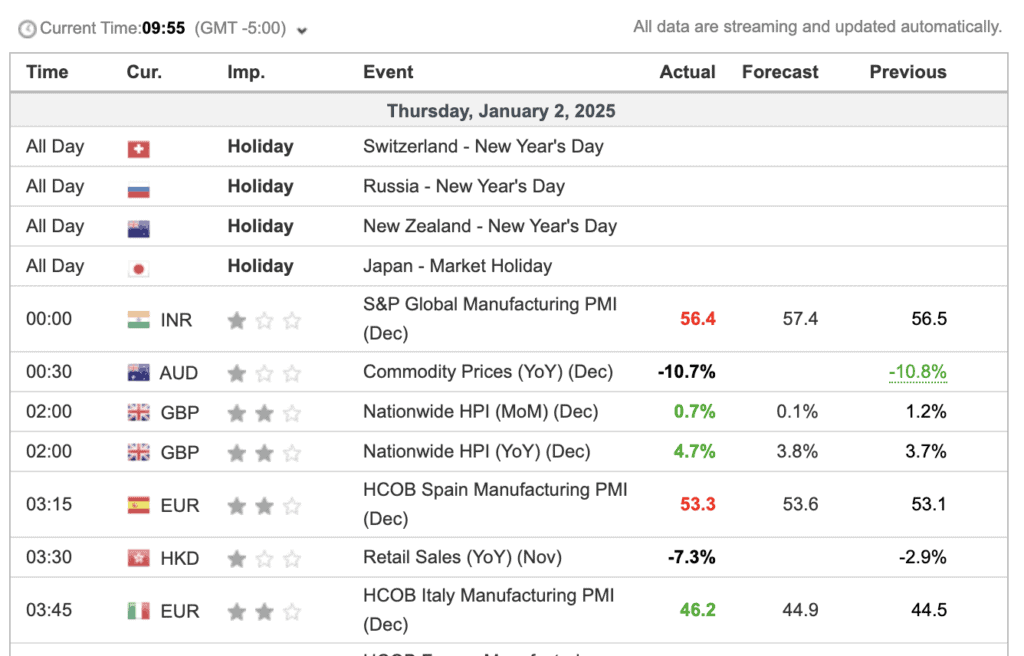
A complicated interaction of several economic elements influences the forex market. Traders heavily depend on the Forex calendar as a vital tool if they are keen to properly negotiate this changing terrain. This all-inclusive tool offers central bank announcements, data releases, and a calendar of critical economic events that might greatly affect the value of currencies. Understanding the Forex calendar helps traders make better decisions, predict market volatility, and increase their probability of success.

What is Economic Calendar in Forex?

Forex traders depend on an economic calendar, which offers a timetable of forthcoming events and data releases capable of affecting exchange rates. It provides a road map for navigating the financial terrain and guides traders toward wise decisions grounded on expected changes in the market. Important events affecting the currency market listed on the economic calendar include interest rate decisions, employment data, inflation statistics, and other pertinent indicators.

Importance of the Economic Calendar

The economic calendar is vital for traders since it offers information on how happenings in the economy could influence currency pairs. For example, if a country raises a solid job report, traders may expect currency appreciation since they expect the central bank to increase interest rates. On the other hand, poor economic statistics could cause the currency to devaluate. Keeping updated on these developments helps traders set themselves to profit from possible market swings.

Key Components of an Economic Calendar

  1. Economic Indicators: The calendar features several economic data like retail sales, producer price index (PPI), consumer price index (CPI), and GDP. Every indicator offers information about the state of an economy and has a major impact on the value of currencies.
  2. Event Timing: Often shown in many time zones, the economic calendar depicts the date and hour of every occurrence. This lets traders make their plans based on these important announcements, ensuring their readiness for possible volatility.
  3. Forecasts and Previous Data: Apart from the real data releases, the calendar usually comprises past data points and estimates from analysts and economists. This data enables traders to evaluate if the real performance satisfies, surpasses, or falls short of projections.
  4. Impact Ratings: Many economic calendars credit events with impact ratings, reflecting their possible influence on the market. While low-impact events may have little influence, those classified as high-impact will probably generate notable volatility.

How to Use the Economic Calander

The economic calendar helps traders create their trade plans. 

There are several ways to make good use of this instrument:

  • Pre-Event Analysis: Traders might study forecasts and past performance to ascertain possible market movements before significant economic announcements. This study will enable them to choose whether to enter or leave points of view.
  • Volatility Management: Knowing when highly significant events are planned helps traders properly control their risk. To accommodate more volatility, they might decide to change their stop-loss and take-profit levels or forgo trading during these times.
  • Post-Event Reactions: Traders can track the market's response following the publication of economic statistics. Price swings can reveal information about traders' data interpretation, guiding the next trading moves.

Advantages Of Forex Calendar

Forex traders really need an economic calendar since it provides a complete picture of forthcoming economic events and data releases that can have a big impact on the value of currencies. Knowing the benefits of applying an economic calendar will enable traders to improve their trading plans and make wise selections. 

These are some main advantages:

1. Timely Information on Economic Events

An economic calendar's main benefits are that it offers timely information on significant economic events such as interest rate decisions, jobless reports, inflation data, and GDP releases. Tracking these events helps traders predict market fluctuations and modify their positions. For example, traders can set themselves to profit from the possible appreciation of that money if a central bank is predicted to hike interest rates.

2. Improved Risk Management

The economic calendar lets traders more successfully control their risks. Knowing when significant economic events will happen helps traders be cautious; they could tighten stop-loss orders or refrain from trading entirely in times of projected volatility. By means of this proactive strategy, trading cash is safeguarded, and any losses are minimized.

3. Enhanced Trading Strategies

An economic calendar helps a trader improve their trading strategy. By comparing historical economic data with projections, traders can spot trends and patterns that might affect the value of currencies. For instance, traders would think about buying a country's currency in expectation of more strength if that country’s regularly shows high employment rates.

4. Understanding Market Sentiment

Forecasts from economists and analysts abound on economic calendars, offering perceptions of market mood. Traders can learn how the market is responding to economic news by contrasting actual data releases with projections. If actual outcomes regularly surpass predictions, it might suggest a positive attitude for that currency, which would force traders to change their positions.

5. Impact Ratings for Events

Many economic calendars give impact ratings to events, therefore indicating their possible market influence. Low-impact events may have little effect; high-impact events are likely to create notable volatility. This knowledge enables traders to effectively spend their time and money by helping them rank which events to concentrate on and get ready for.

6. Post-Event Analysis

Traders can examine market behavior using the economic calendar following the publication of economic data. Seeing how currency pairs respond to particular situations can give insight into the next trading decisions. If a currency appreciates noticeably following a strong economic report, for example, it could suggest that traders have high hopes for the country's state.

7. Comprehensive Overview of Global Markets

Usually including economic events from many countries, an economic calendar gives traders a worldwide view. This thorough review helps traders to realize how the state of the economy in one nation could affect other currencies and the FX market generally. For instance, a big American economic event might affect pairs involving the US dollar as well as other major currencies.

Why You Need Forex Calendar?

Forex calendar use helps traders avoid shocks that could cause expensive blunders. For example, unexpected employment statistics or a quick change in interest rates could lead to large price swings. Either by entering or closing positions in advance or by postponing trading during times of great uncertainty, a Forex calendar helps you to schedule your trades around these events.

Forex calendars also let traders spot trends and patterns that recur following particular economic releases. Developing more efficient trading plans, enhancing decision-making, and finally raising profitability depend on this realization, which can be quite beneficial. A Forex calendar is not only a tool for keeping current; it's also a fundamental part of good trading that helps you make wise judgments and better control risk. 

Practical Example Of FX Calendar

Its relevance can be shown by a useful case study of how a trader exploited the forex calendar to profit on an economic event. 

The Event: U.S. Non-Farm Payrolls (NFP) Release

Released monthly by the US Bureau of Labor Statistics, the Non-Farm Payrolls (NFP) report is among the most carefully watched economic statistics available on the currency market. Including the number of jobs created or lost in the economy, unemployment rates, and pay increase, this paper offers important new perspectives on the state of the American labor market. Particularly for pairs featuring the US dollar (USD), the NFP report is well known for causing notable volatility in the forex market. 

Utilizing the Forex Calendar 

A smart forex trader saw the date and timing of the announcement on the economic calendar before the NFP data was set for publication. The dealer noted that the market consensus projected significant job growth, which might inspire optimism for the USD. Knowing the possible influence of this information, the trader resolved to create a trading plan. 

Post-Event Analysis

The trader studied past NFP figures and market movements in the days before the NFP release. They observed that the USD usually rose against big currency pairs like the euro (EUR) and the Japanese yen (JPY) when real job statistics exceeded projections. On the other hand, if the report fails to meet expectations, the USD usually lost value. Equipped with this information, the trader developed a strategy to position himself long on the USD versus the EUR. 

The Trade Execution

The trader closely monitored the economic calendar and set alarms for the NFP announcement day. The actual employment count added when the data came out was much greater than the projection, which immediately drove the USD into great optimism. Profiting on the market response, the trader rapidly set a long position on the USD/EUR pair. 

Post-Event Analysis and Profit

Following the good NFP news, the USD appreciated versus the EUR as expected. The trader locked in gains in a short time since their position developed value quickly. The trader effectively profited on the market movement by predicting the NFP release and developing a trading plan using the economic calendar.

How To Create Trading Strategy With Forex Calendar

Creating a trading strategy using a forex calendar is an effective way for traders to capitalize on economic events that can influence currency prices. The forex calendar provides a schedule of important economic data releases, central bank meetings, and other events that can significantly impact the forex market. Here’s a step-by-step guide on creating a trading strategy using a forex calendar.

Step 1: Familiarize Yourself with the Economic Calendar

Before you can effectively use a forex calendar, it is essential to understand how to read it. Economic calendars typically list events by date and time, along with details such as the country, the type of economic indicator, previous data, forecasts, and actual results. High-impact events are often highlighted, indicating that they may cause significant market volatility.

Step 2: Identify Key Economic Indicators

Focus on key economic indicators that are known to influence currency prices. Some of the most important indicators include:

  • Non-Farm Payrolls (NFP): A monthly report that provides data on employment in the US economy, which can significantly impact the USD.
  • Gross Domestic Product (GDP): Measures the overall economic performance of a country and can affect currency strength.
  • Consumer Price Index (CPI): Indicates inflation levels, which can influence central bank interest rate decisions.
  • Interest Rate Decisions: Announcements from central banks regarding changes in interest rates can lead to immediate market reactions.

Step 3: Plan Your Trades Around Economic Events

Once you have identified key economic indicators, plan your trades around the dates and times of these events. For example, if you anticipate a strong NFP report, you might consider taking a long position on the USD against other currencies. Conversely, if you expect weak data, you might look to short the USD.

Step 4: Analyze Market Sentiment

Before the economic event, analyze market sentiment and forecasts. Look at how traders are positioning themselves leading up to the event. This can provide insights into potential market reactions. For example, if the consensus is overwhelmingly bullish on a currency due to expected positive economic data, you may want to align your strategy accordingly.

Step 5: Set Entry and Exit Points

Based on your analysis, set clear entry and exit points for your trades. Determine your stop-loss and take-profit levels to manage risk effectively. For instance, if you enter a trade based on a positive economic report, you might set a take-profit level just below a key resistance level, while placing a stop-loss slightly below a support level to minimize potential losses.

Step 6: Monitor the Market Reaction

After the economic data is released, closely monitor the market's reaction. Prices can move rapidly in response to unexpected results. If the actual data deviates significantly from forecasts, be prepared to adjust your strategy. For example, if the NFP report shows much stronger job growth than expected, the USD may surge, and you might want to take profits or adjust your stop-loss to lock in gains.

Step 7: Review and Adjust Your Strategy

After trading around an economic event, take the time to review your performance. Analyze what worked well and what didn’t. Consider how accurately you predicted market movements and whether your entry and exit points were effective. Use this analysis to refine your trading strategy for future events.

Using Technical Analysis to Read Forex News

For forex traders, technical analysis is essential since it lets them assess market patterns and price movements grounded on past performance. Technical analysis can assist traders in deciding whether to enter or quit trades when taken in concert with currency news. 

Understanding the Foundations of Technical Analysis

Technical analysis is the study of price charts and the application of several indicators to forecast future price changes. Traders frequently employ moving averages, trend lines, and oscillators to find trends and patterns. Understanding these trends helps traders make reasonable guesses regarding how news events can influence currency values.

The Role of Forex News

Forex news covers central bank reports, geopolitical events, economic data, and other elements influencing currency values. For example, a robust American employment report might cause the USD to appreciate against other currencies. Negative news, including as unrest, can cause devaluation on the other hand.

Example: Using Technical Analysis with Forex News

Scenario: Upcomming U.S. Non-Farm Payrolls (NFP) Report

Suppose a situation where a trader is getting ready for the forthcoming U.S. Non-Farm Payrolls (NFP), a monthly publication of vital economic statistics. For the USD especially, the trader is aware that the NFP report usually generates notable volatility in the forex market.

1. Analyzing the chart: The trader looks at the USD/EUR currency pair daily on a chart before the NFP publication. The price has risen, and their 50-day moving average shows a positive trend since it exceeds their 200-day moving average. Additionally, the trader noted a 1.0800 support level and a 1.0900 resistance level.

2. Setting Up for The News: The trader notes from looking over the economic calendar that the NFP report is set for release at 8:30 AM EST. If the data reveal significant job growth, they expect the USD to weaken versus the EUR, overcoming the resistance level at 1.0900.

3. Making a Trade Decision: Based on their study, the trader chooses to put a buy order for USD/EUR just before the news release, therefore determining a take-profit level at 1.0950 (just above the resistance level) and a stop-loss at 1.0780 (just below the support level). This approach lets the trader control risk and profit on possible upward movement.

4. Market Reaction: The NFP report reveals that the US economy created 300,000 jobs, much over the 200,000 projection when it was released. The USD thus strengthens, and the price USD/EUR increases significantly, surpassing the resistance level.

5. Executing the Trade: The trader's buy order is triggered, and soon after the news release, the price reaches the take-profit level of 1.0950. Using their technical study and forex news knowledge, the trader effectively locks in gains.

FAQ’s

Can a Forex calendar guarantee success?

Though it cannot ensure success, a Forex calendar improves your capacity to make wise trading decisions by quickly analyzing events influencing the market. Anticipating possible market volatility helps you to better control risks and improve your trading plans.

What would a perfect Forex calendar look like?

An ideal Forex calendar should be easy to use and provide clear, customizable views of important economic events, dates, hours, and predicted effects. It should also include historical data, real-time updates, and the option to filter events depending on currency pairs and areas pertinent to the trader's approach.

Currency Pairs: What They are And How They Work

Currency Pairs

Forex trading is built on currency pairs, which show one's value in relation to another. Two currencies are engaged in every forex trade: the base currency and the quote currency. The price of a currency pair tells you how much of the quote money is required to buy one unit of the base money. Forex traders must grasp how currency pairs behave since it affects the computation of earnings and losses. Whether trading exotic pairs or large pairs like EUR/USD, efficient forex market navigation depends on an awareness of the characteristics of currency pairs.

What are Currency Pairs?

Within the field of forex trading, currency pairs are basic ideas that every trader has to know. Two currencies exchanged against one another make a currency pair. The base currency of the pair is the first one; the second is called the quote currency. The two currencies' exchange rates show how much of the quote currency is required to buy one unit of the base currency.

Why You Need to Know About Currency Pairs

For various reasons, knowing currency pairs is absolutely vital.

  1. Knowing currency pairs enables traders to decide which pairs to trade depending on geopolitical events, economic data, and market conditions. For instance, a trader might decide to purchase USD against other currencies knowing that the US Federal Reserve is expected to hike interest rates.
  2. Different currency pairs have different degrees of volatility and liquidity, which helps to manage risk. Knowledge of these variations helps traders control their risk. For example, because of their liquidity, trading big pairs usually carries less risk; exotic pairs may necessitate more care because of their higher spreads and less trading volumes.
  3. Depending on market attitude and economic situation, currency pairs can act differently. Knowing these behaviors helps traders create winning trading plans catered to particular pairs. To profit on volatility, a trader can create a strategy targeted on trading the GBP/USD pair during the UK economic data releases.
  4. Currency pairs typically shows relationships between them. For example, given their link with the US dollar, the EUR/USD and GBP/USD pairings can travel in the same direction. Knowing these relationships will enable traders to spot possible trading prospects and steer clear of unwarranted hazards.
  5. Studying about currency pairs helps one to grasp world economy more broadly. Traders have to be current on central bank policy, economic data, and geopolitical events influencing currency values. Successful trading requires this awareness.
  6. As traders grow more acquainted with currency pairs, they can hone their trading tactics and skills. This information boosts general trading performance and confidence, which eventually helps to provide higher forex market results.

How They Works?

Currency pairs are the basis of trading in the forex market. Two currencies exchanged against one another make a currency pair; the first is the base currency and the second is the quote currency. For everyone engaged in forex trading, knowing how money pairings work is absolutely vital since it directly affects the trading process, pricing, and techniques.

Structure of Currency Pairs

Currency pairs are typically presented in the format of Base Currency / Quote Currency. 

For example, in the currency pair EUR/USD, 

EUR (euro) is the base currency.

USD (US dollar) is the quote currency.

The exchange rate indicates how much of the quote currency is needed to purchase one unit of the base currency. For instance, if the EUR/USD exchange rate is 1.10, it means that 1 euro is equivalent to 1.10 US dollars.

Example of Currency Pair Trading

Let’s consider an example using the EUR/USD pair. Suppose you believe that the euro will strengthen against the US dollar. You decide to buy the EUR/USD pair at an exchange rate of 1.10.

  • Trade Execution: You buy 1,000 euros, which costs you 1,100 USD (1,000 EUR x 1.10 USD/EUR).
  • Market Movement: After a few hours, the exchange rate rises to 1.15. You decide to sell your euros back to dollars.
  • Profit Calculation: When you sell your 1,000 euros at the new rate, you receive 1,150 USD (1,000 EUR x 1.15 USD/EUR).
  • Net Gain: Your profit from this trade is $50 (1,150 USD - 1,100 USD).

This example illustrates how traders can profit from changes in the exchange rate of currency pairs. Understanding the dynamics of currency pairs allows traders to make informed decisions based on market analysis and economic indicators.

<H2>Most Popular Currency Pairs</H2>

Here’s a look at some of the most commonly traded currency pairs and why they are important.

1. EUR/USD (Euro/US Dollar)

The EUR/USD pair is the most traded currency pair in the world, representing the euro against the US dollar. It accounts for a significant portion of daily forex trading volume.

Importance

High liquidity in the EUR/USD pair helps traders to enter and leave positions with least possible price swings. Acting as a benchmark for world economic health, it is heavily impacted by financial data from the United States and the Eurozone. This pair also shows volatility around significant economic announcements, which gives traders possible profits.

2. USD/JPY (US Dollar/Japanese Yen)

The USD/JPY pair is another major currency pair that represents the US dollar against the Japanese yen. It is known for its liquidity and is popular among traders.

Importance

With value generally rising during market uncertainty, the Japanese yen is considered as a safe haven currency. Both the US Federal Reserve and the Bank of Japan modify interest rates, therefore central bank policies are quite important for traders. This pair is sensitive to both. Given Japan's position as a significant exporter, changes can also affect its trade balances.

3. GBP/USD (British Pound/US Dollar)

The GBP/USD pair, also known as "Cable," represents the British pound against the US dollar. It is one of the oldest currency pairs and remains popular among traders.

Importance

Market mood largly influences the GBP/USD pair, especially with relation to the UK economy and events like Brexit that can generate considerable volatility. Exchange rate also depends on economic data from the US and the UK. Its price swings can draw speculative trading, therefore providing possible profit margins.

4. AUD/USD (Australian Dollar/US Dollar)

The AUD/USD pair represents the Australian dollar against the US dollar. It is often influenced by commodity prices, given Australia’s status as a major exporter of commodities.

Importance

Because Australia's main exports are commodities, especially gold and iron ore, the Australian dollar is intimately correlated with their value. Global risk appetite also influences the AUD/USD pair; the Australian dollar strengthens in good times and weakens under uncertainty. This currency pair is also much influenced by interest rate differences between the RBA and the US Federal Reserve.

5. USD/CAD (US Dollar/Canadian Dollar)

The USD/CAD pair represents the US dollar against the Canadian dollar. It is heavily influenced by oil prices due to Canada’s reliance on oil exports.

Importance

Canada's large oil output influences the CAD/USD currency rate greatly. This pair also affects economic indices from both nations, including GDP growth and employment rate. Furthermore influencing the USD/CAD exchange are trade relations between the US and Canada since changes in trade policies influence both countries.

<H3> Types Of Currency Pairs </H3>

In the forex market, currency pairs are categorized into four main types based on their liquidity, trading volume, and volatility. These categories are:

<H4> Major </H4>

Major currency pairs involve the US dollar (USD) paired with one of the other most traded currencies in the world, such as the euro (EUR), Japanese yen (JPY), British pound (GBP), Swiss franc (CHF), Canadian dollar (CAD), or Australian dollar (AUD). Examples include:

  • EUR/USD (Euro/US Dollar)
  • USD/JPY (US Dollar/Japanese Yen)
  • GBP/USD (British Pound/US Dollar)
  • USD/CHF (US Dollar/Swiss Franc)
  • USD/CAD (US Dollar/Canadian Dollar)
  • AUD/USD (Australian Dollar/US Dollar)

High liquidity of major currency pairings makes buying and selling with tight spreads and little slippage. Usually showing less volatility than other pairings, they are appropriate for novices and risk-averse traders. Their liquidity and attractiveness among traders and financial institutions improve much more.

<H4> Crosses </H4>

Cross currency pairs do not involve the US dollar. They are typically formed by pairing two major currencies, such as:

  • EUR/GBP (Euro/British Pound)
  • EUR/JPY (Euro/Japanese Yen)
  • GBP/JPY (British Pound/Japanese Yen)
  • AUD/JPY (Australian Dollar/Japanese Yen)
  • EUR/CHF (Euro/Swiss Franc)

Although still liquid, cross-currency pairs often have less trading volume than major pairs, which results in greater spreads and maybe increased volatility. Their US dollar pairs and the indirect relationship between the two currencies affect their rates. Traders looking for possibilities beyond the US dollar or want to concentrate on particular currency pairings, such as EUR/GBP or GBP/JPY find these pairs preferred.

<H4> Exotic </H4>

Exotic pairs consist of one major currency paired with the currency of an emerging or smaller economy, such as:

  • USD/TRY (US Dollar/Turkish Lira)
  • USD/MXN (US Dollar/Mexican Peso)
  • USD/SEK (US Dollar/Swedish Krona)
  • USD/HKD (US Dollar/Hong Kong Dollar)
  • USD/SGD (US Dollar/Singapore Dollar)

Since exotic currency pairs have the lowest trading volume, greater spreads and more volatility result. These pairs are regarded as riskier investments than major and cross pairs because of their reduced liquidity and higher risk. They make traders eager in particular new markets or those ready to accept more risks in search of possible benefits.

Commodity Currency Pairs

Commodity currency pairs are a subset of exotic pairs that involve currencies of countries heavily dependent on the export of commodities, such as:

  • AUD/USD (Australian Dollar/US Dollar)
  • NZD/USD (New Zealand Dollar/US Dollar)
  • USD/CAD (US Dollar/Canadian Dollar)

These pairs are influenced by the prices of commodities like gold, silver, oil, and agricultural products, which are significant exports for the countries involved.

<H2> Conclusion </H2>

Forex trading is essentially based on currency pairs, each with unique opportunities and drawbacks. For traders looking for fewer erratic and more consistent fluctuations, major pairs—with their great liquidity and stability—are ideal. Targeting particular strategic goals, cross pairings offer a means of trading currency relationships free from US dollar involvement. Though they carry more risk, exotic pairs—which have lesser liquidity and more volatility—have huge possibilities. Knowing these dynamics helps traders to properly modify their plans, control risk, and profit from changes in the market. Strong command of money improves forex market trading success and decision-making.

<H2> FAQ </H2>

How do you predict currency pairs?

Analyzing technical indicators—such as charts and patterns—as well as basic elements like economic data and geopolitical events helps one to predict currency pairs. These studies taken together provide future movement forecasts.

How do I choose a currency pair?

Depending on your trading objectives, risk tolerance, and market knowledge, select a currency pair. To match your approach, think about liquidity, volatility, and economic situation of the currencies involved.

How Do You Trade Using Williams Fractal Indicator?

Williams Fractal Indicator

The financial markets are full of various indicators that are used by traders in the process of making their decisions. Of these, the Williams Fractal Indicator is a rather peculiar one, which will be of particular interest to those who seek to find reversal points in the market. In this article we will discuss what fractals are, how they are applied in trading and how you can use the Williams Fractal Indicator to improve your trading strategy.

 What Is a Fractal?

 In its simplest form, a fractal is an object that has the same features as the larger whole at a smaller scale. You can find examples of fractals everywhere in nature: in the formation of branches in a tree, the structure of snow flakes, and even the geographical features such as the coastlines. In mathematics, fractals are geometric figures that are made up of parts that are smaller copies of the whole figure.

 When applied to the financial markets, a fractal is a pattern that can be repeated and which may signify a reversal point in the price action. The financial fractals are not as complex as the natural fractals in the physical world, but they are useful for the technical analysis to define the levels where the market can reverse.

Types of Fractal

 Fractals in trading can be categorized into two main types: and these are the up fractals and the down fractals.

•                   Up Fractals: These are signals that may be given when the market is possibly about to go down. An up fractal is created when a specific bar is surrounded by two bars that are higher than that bar, often called the ‘middle’ bar. This pattern indicates that the market is at its highest and may be due for a reversal in the other direction.

•                   Down Fractals: On the other hand, down fractals are formed when the market may be preparing for an up move. A down fractal occurs when a bar has two lower bars on each side of it and this means that the market might be at the low side and could go up.

 Knowledge of these types of fractals is important since they are the basis of the Williams Fractal Indicator, which helps traders identify potential reversal levels in the market.

What Is Fractals by Bill Williams?

The Williams Fractal Indicator is one of many indicators created by Bill Williams, a trader and author specialising in technical analysis. Williams’ theories stress the significance of market psychology and the randomness of price fluctuations. His approach is based on the conventional technical analysis indicators as well as some specific ideas such as fractals that will provide the trader with a broader perspective of the market.

 Apart from the fractal indicator, Williams developed other tools such as Alligator Indicator and the Awesome Oscillator. These tools are usually employed in combination with the fractal indicator in order to improve the efficiency of the latter in terms of forecasting.

Calculation of Bill Williams Fractal Indicator

 The calculation of the Williams Fractal Indicator is not very complex which one of the reasons why it is used is. Here’s a step-by-step guide to understanding its formation:

1.                Identify the Middle Bar: The first step in fractal analysis is to find a bar in the price chart that you think is the highest or the lowest point of a potential fractal. This is your middle bar.

2.                Compare Adjacent Bars: Secondly, consider the two bars right before and right after this middle bar.

·                   For an up fractal: There should be two lower highs on the left and on the right of the middle bar.

·                   For a down fractal: The middle bar should have two higher highs on each side of it.

3.                Mark the Fractal: However, if the above conditions are met, then mark the fractal on your chart as shown below. It is usually indicated by an arrow placed above the high of the middle bar for the up fractals or below the low of the middle bar for the down fractals.

 This basic pattern assists the trader in determining possible reversal points, which can be useful for entries or exits.

 The Use of Fractals in Trading according to Bill Williams

 Fractals play an important role in the general trading approach of Bill Williams. They assist the traders in finding out the support resistance and levels which are very vital in determining the trends of the market. Williams also thought that the market has a ‘fractal’ nature and that by recognizing these patterns, the trader can predict the future movements of the market more accurately.  Fractals are usually applied together with other indicators such as the Alligator and the Awesome Oscillator. These tools assist in the confirmation of signals, minimizes the instances of false signals and increases the chances of successful trades. For instance, an up fractal that is formed above the teeth of the Alligator should be a signal to sell, while a down fractal that is formed below the teeth of the Alligator should be a signal to buy.

How to Trade Bill Williams Fractals

To begin trading with the Williams Fractal Indicator, you have to install it on your trading platform. The fractal indicator is available for download as an add-on for most trading platforms; however, most of the trading platform like MetaTrader 4 (MT4), MetaTrader 5 (MT5), and TradingView have the fractal indicator as a standard tool. Here’s how you can set it up:

 1. MetaTrader 4/5:

·                   Open your chart.

·                   Go to the “Insert” menu, then click on “Indicators” and then click on “Bill Williams. ”

·                   From the list, click on ‘Fractals. ’

·                   The fractals will appear as small arrows on your chart, above or below the price bars as soon as you draw them.

 2. TradingView:

·                   Open the chart of your choice.

·                   To do this, go to the top of the screen and click on the “Indicators” button.

·                   In the search bar, enter ‘Fractals’ and choose the Williams Fractal Indicator that is already installed.

·                   The fractals will be shown on your chart in the same way as MetaTrader.

 After the indicator is added, you can adjust the settings of the fractal markers according to your preferences, for instance, the color or the size of the markers.

 Market Trends with Fractals

 This is one of the areas where the Williams Fractal Indicator is particularly useful, namely, the identification of trends. Fractal analysis helps traders to predict the direction of the market and make the right decisions on trading. Here’s how you can use fractals to identify trends:

•                   Up Fractals: If a series of up fractals appear then it means that the market is in a downtrend since the price is making lower highs. This might be interpreted as a bearish market sentiment.

•                   Down Fractals: A sequence of down fractals, however, may suggest an uptrend because the price is making higher lows, which implies that the market is bullish.

 Nevertheless, fractals can be used in conjunction with other indicators such as support resistance levels. For example, if an up fractal is generated close to a known resistance level, it may strengthen the notion of a reversal and therefore is a stronger signal to sell.

Entry and Exit Strategies Using Fractals

To get maximum profit and minimum risk while trading with the Williams Fractal Indicator, entry and exit signals are crucial. Here are some common strategies you can employ:

•                   Breakout Strategy: Among them, the method of using fractals to find breakout points is quite effective. If the price closes above a previous up fractal it could be a bullish breakout and a buy signal. On the other hand, a breakout below a down fractal could imply a bearish breakout providing a selling signal.

•                   Fractal Confirmation with Trend Lines: The trend lines are usually extended along the up fractal peaks or along the down fractal troughs. If price penetrates these lines it can act as confirmation of a trend reversal and therefore a good entry or exit point.

•                   Stop Loss Placement: Stop-loss orders can also be placed using fractals. For a long position, it is possible to put a stop loss just below the recent down fractal to minimize an unfavorable price movement. In a short position, a stop loss placed slightly above an up fractal can be used to protect the trader from being caught on the wrong side of a sharp price movement.

 Using Fractals with Other Indicators

 Fractals by themselves can be very effective but they are even more so when used in conjunction with other indicators. Here are a few popular combinations:

•                   Moving Averages: Moving averages can be used along with fractals to confirm the direction of the trend. For instance, if a down fractal is created above a rising moving average, it may be a good time to go long.

•                   Relative Strength Index (RSI): The RSI can be used to support fractal signals by showing whether the market is overbought or oversold. If the market is oversold and a down fractal is made, then it may be a good time to buy and if the market is overbought and an up fractal is made then it may be good time to sell.

•                   MACD (Moving Average Convergence Divergence): This means that integrating the fractal indicator with MACD can be useful in giving a better picture of the momentum of the market. This is particularly so if the fractal is formed in the direction of the MACD crossover so as to make the trade more accurate.

 Some of the things that one should avoid when trading with fractals include the following:

 Like any other strategy, trading with fractals has its drawbacks. Here are some common mistakes to watch out for:

•                   Over-Reliance on Fractals Alone: Fractals are good to use, but they should not be used alone in trading. Using only fractals as a signal and not taking into account other signals or the current market situation results in wrong decisions.

•                   Ignoring Market Context: The use of fractals should be done with the understanding of the overall market situation. For instance, in a strongly trending market, fractals may be observed quite often, but not all of them suggest a reversal. Knowing whether the market is trending or ranging can assist you in fractals’ interpretation.

•                   Neglecting Risk Management: It is important to understand that even when the fractal setups are the best, the trades can still go wrong. It is always advisable to employ stop-loss orders and look at the risk-to-reward ratio before getting into a trade using fractals.

Pros And Cons Of Bill Williams Fractal

The Williams Fractal Indicator offers several benefits that make it appealing to traders:

•                   Simplicity: Perhaps the most important benefit of the Williams Fractals is that they are easy to apply. This indicator is quite simple and straightforward to use, thus suitable for both novice and experienced traders.

•                   Clear Signals: Fractals are very clear and unambiguous, and they can be used to determine reversal points with a fair amount of ease. It can be of great benefit especially in uncertain forex trading markets where decisions have to be made at the right time.

•                   Versatility: Williams Fractals can be applied to the Forex market, stock market and commodities. This versatility enables the trader to use the same concepts in different trading platforms.

Despite their advantages, Williams Fractals also have some limitations that traders should be aware of:

•                   Lagging Indicator: Fractals like most of the indicators are trailing in the sense that they are created after the price has moved. This can sometimes lead to what is known as ‘first-mover disadvantage’ or ‘second mover advantage’.

•                   False Signals in Ranging Markets: In ranging or sideways markets, fractals can give out false signals, which results in whipsaws and possible losses. Traders ought to be very careful and should look at the big picture before they make any move based on fractal signals.

•                   Dependence on Other Indicators: Fractals are helpful but they are more so when used in conjunction with other indicators. Using them alone may not give a clear picture of the market as may be expected.

 Some Useful Guidelines on How to Employ Fractals Appropriately

 To get the most out of the Williams Fractal Indicator, here are some practical tips:To get the most out of the Williams Fractal Indicator, here are some practical tips:

•                   Combine with Other Tools: Fractals should not be used alone but rather in combination with other indicators such as moving averages, RSI, or MACD. This can assist in eliminating noise and enhance the probability of your trades being correct.

•                   Backtest Your Strategy: However, for fractals to be used in live trading, it is advisable to backtest the strategy using historical data. It can be useful for you to know how the fractals work in different market conditions and improve your strategy.

•                   Use a Demo Account: If you are a beginner and you have not traded with fractals before then, it is advisable to trade using a demo account. This means that you can try out your strategies with the virtual money and thus gain confidence and experience.

Forex Strategies – What works and what doesn’t

Forex Strategies

The forex market is a dynamic market that is under constant evolution and traders are always in the lookout for ways to increase their profits and decrease their losses. The fact is that there are hundreds of forex trading strategies, and it is challenging to understand which one is the most suitable for you. In this article, this will look at the different forex strategies out there, why they work, and when it is time to change your strategy.

Trend Following & Monitoring

Trend following is among the most widely used approaches to the forex trading. At its simplest, this strategy is about defining and tracking the movement of the market. Trend followers who employ this strategy are of the opinion that the market will persist in the existing trend until a reversal signal is obtained.

 The psychology behind trend following is straightforward. The phrase ‘The trend is your friend’ implies that instead of trying to guess on which direction the market is going to move, traders follow the existing trends. For instance, if the market is in an upward trend, a trend follower will be searching for places to invest, given that the trend will persist.

 Trend following is different from other approaches, for example counter-trend trading prop firms where the main aim is to trade in the opposite direction of the trend. Trend following is considered to be a safer strategy as compared to the other forex strategies but it needs a lot of patience and discipline as trends may take some time to form and may even correct themselves in the short term.

 Monitoring tools and indicators of trends

 For traders to be able to follow trends, they require tools and indicators that will enable them to track the trends. Some of the most popular tools include:Some of the most popular tools include:

•                   Moving Averages (MA): Moving averages work by averaging out price data to give a single line that can be easily followed to determine trends. In trading, the trend is usually identified by the use of short-term and long-term MAs such as the 50-day and 200-day MAs.

•                   Relative Strength Index (RSI): The RSI calculates the velocity and the momentum of the price fluctuations. This is useful for the trader in that it provides an indication of when a particular commodity is overbought or oversold, which may lead to a reversal of the trend.

•                   Moving Average Convergence Divergence (MACD): The MACD is a trend following momentum indicator that is the difference between two moving averages. It is usually applied to identify possible buy sell trading signals for forex day trading strategies.

Besides these indicators, trendlines and channels are also used by the traders to have a graphical representation of the trend and its strength. Trendlines are drawn by joining a series of higher tops in an uptrend or lower tops in a downtrend. They are created by drawing horizontal lines parallel to each other that enclose the price action and give a probable range of movement of the price.

Global News Trading

The forex market is influenced by international news stories in a significant manner. This is due to the fact that, economic and political factors such as the Gross Domestic Product, political instabilities and other unforeseen events in the global market can greatly affect the price of currencies. Those traders who are aware of the impact of these factors can devise forex trading strategies that will take advantage of the fluctuations in the market that is caused by the news.

 For instance, actions like changing of interest rates by central banks like the Federal Reserve or the European Central Bank cause fluctuations in currency pairs. If there is an increase in the interest rate more than anticipated then it is beneficial for the currency while a decrease in the interest rate is not good for the currency. Other important news items include employment reports, GDP and inflation rates are also among the important news items that traders look at.

 Timing is very important in the forex day trading strategies. Most traders apply the use of economic calendars to help them know when certain news events are expected to occur and when to trade. These calendars show the dates and times of important economic indicators, and the expected market effect. This knowledge enables the traders to be in a position to predict the market reactions in relation to these events in order to make the right decisions on the right time.

Strategies for Trading on News Events

Forex trading news event based strategy differs from other forex strategies days in the forex market. The first objective is to trade on the higher variability that is typical for large announcements. Here are some common strategies:

 •      Straddle Strategy: This strategy involves entering two orders at the market, one to buy and the other to sell, slightly above and below the current market price at the time of news release. The theory is that the market will gap up or down in one direction after the news and one of the orders will be filled while the other is killed.

 •      Breakout Strategy: Breakout strategy is a concept that aims at establishing key support and resistance levels prior to the release of some news. Buyers come into the market when the price crosses these levels in the hope that the trend will persist in the direction of the breakout.

 •      Fade the News: Sometimes, the first reaction of the market to a piece of news can be overdone, and there is a reversal. Fading the news means going against the first movement of the price, expecting a reversal after the first impulse.

 In any case, risk management is an essential component of news trading. This means that the price movements can be very large and you need to ensure that you have the right stop losses and position size to ensure that your trading account is safe.

Scalping Trading Intervals

Scalping is a high frequency trading technique that involves buy sell securities within a single day, with an intention of making small profits from the price fluctuations. Unlike other forex trading strategies that are based on trends or news, scalping is based on making many trades in a short period of time and making small profits from each trade but there are specific forex strategies days where market is working good.

 Scalping is a very demanding strategy that needs a lot of attention, patience and knowledge about the market. It is most appropriate for those traders who can spend much time observing the markets and who do not mind taking quick decisions.

 Generally, scalpers keep their positions for a few seconds to a few minutes; they do not hold their positions for more than a few minutes. The idea is to make small profits many times over and these profits when compounded give huge profits by forex day trading strategies.

 Methods and Instruments for Scalping

 Scalping is a form of trading that depends on proper strategies and equipment that are used to identify the slightest price changes. Some of the key techniques and tools include:Some of the key techniques and tools include:

•                   Tick Charts and One-Minute Charts: Tick charts or one-minute charts are usually employed by scalpers in order to monitor the market movements. These charts give a detailed picture of the price movements and help scalpers to enter or exit the market at the right time.

•                   Bollinger Bands: Bollinger Bands are used to gauge the level of market activity and to determine when a security is overbought or oversold. When the price gets out of the bands, it may indicate a reversal, and this is where scalpers get their entry points.

•                   Stochastic Oscillator: This momentum indicator relates a specific closing price of a currency to the price span for a specific period. It is used to produce overbought or oversold trading signals and thus assists scalpers in determining when to open or close trades.

 Scalping requires fast execution and narrow spreads as any delay or a wide spread might cost money. Most scalpers like to trade during the most active market time so that their orders are executed at the best possible prices and in the shortest time possible.

Challenges and Risks in Scalping

Nevertheless, scalping is a very efficient strategy that has its own difficulties and drawbacks. Scalping is characterized by high speed and this means that traders have to make their decisions very fast and without much time to research the market. This can lead to mistakes and is not suitable for the beginners at all.

 The primary risks associated with scalping include:

•                   High Transaction Costs: Frequent trading also means that the trader is likely to incur high transaction costs, in case he or she is using a broker who charges high spreads and commissions. These costs can easily offset the profits that are made in the business hence the need to control them.

•                   Emotional Stress: This is because the markets have to be closely watched and decisions made within a short time can be mentally tiring. This is especially so for traders who lack self-control since they are likely to be distracted and hence make bad decisions.

•                   Market Volatility: Scalpers feed on volatility but high volatility is dangerous because it causes unpredictable price movements and slippage which is bad for business.

 For scalping to work, the trader has to have a good plan, adhere to it and always be on the lookout for opportunities. Another aspect of risk control is the stop-loss orders and the size of each trade that must be limited.

Pairs Trading

Pairs trading is a form of trading strategy that does not depend on the direction of the market and it involves the purchasing of one currency pair and the selling of an equally valued currency pair. The concept is to make money from the difference in the rates of two currencies without regard to the direction of the market. This approach can be especially useful in the forex market since the price of one currency is directly related to another because of some economic or political event.  

For instance, a trader might engage in trade the EUR/USD and GBP/USD cross rates, that is, buy the one and sell the other based on an assessment of the relative standing of the currencies in question. If the euro is expected to appreciate against the dollar and pound is still considered to be in a weak position, the trader would go for EUR/USD and against GBP/USD.

Pairs trading can be used to minimize market risk because the trades are normally done in pairs. This means that even if the overall market moves sharply in one direction, the losses from one position may be offset by gains in the other.

Execution and Analysis in Pairs Trading

In order to make a successful pairs trade, one has to look for the right pair and the right time to enter and exit the position. Here are the key steps involved:

•                   Identifying Correlated Pairs: The first process is to determine currencies that have had a relationship in the past. This can be done using statistical tools or correlation matrices that indicate the level of correlation between different pairs.

•                   Analyzing Historical Price Relationships: After correlated pairs are established, traders look at their price history to see whether one currency is relatively too high or too low compared to the other. It is useful in determining which currency should be bought and which one should be sold.

•                   Entering and Exiting Trades: Pairs trade is taken by traders when they have a feeling that the ratio of the two currencies will return to the mean. The trade is exited when the convergence or divergence is as expected and the profits are locked in.

 Pairs trading also take time before the price relationship is realized. The traders also have to be ready to close some of the positions if the correlation between the pairs turns out to be different from expected.

When Is It Time to Change Strategies?

Another important factor that is not easy to decide in forex trading is when to alter or when to discard a particular strategy. In the course of time, market conditions change, and what was once a good strategy may no longer be as effective. It is important to identify that a strategy is not working in the long run in forex trading. Some indicators that your current strategy may no longer be effective include:

•                   Consistent Losses: If you are in a long losing streak, and you are following your plan religiously, then it may be high time to change the plan since it is not fit for the current market.

•                   Increased Market Volatility: When the market is stable, a certain strategy adopted may be effective, but when the market is volatile, the same strategy may not produce the same results. For instance, a trend following system may not perform well in a volatile, trading range environment.

•                   Lack of Clear Trading Signals: If your strategy is based on particular trading signals (for instance, moving average crossovers) and these signals are not given as often or are not as accurate as before, then it is high time to reconsider the strategy.

 The psychological cost of continuing with an ineffective approach is also quite high. Some traders end up ‘waiting’ for the market to turn in their favor, which is a sure way of losing more money. One has to be rational and know when it is time to let go and look for another job.

 Evaluating Market Conditions

 Market conditions are dynamic and therefore what was effective in the past may not be effective in the future. However, for your strategy to be effective it should be reviewed from time to time in order to check the market conditions and make the necessary changes. Key factors to consider when evaluating market conditions include:

•                   Economic Indicators: Fluctuations in interest rates, inflation and GDP have an influence on currency prices and the feasibility of the strategy.

•                   Market Sentiment: Market sentiment can change very fast due to some news, geopolitical events or changes in investors’ behavior. What was effective when the market was bullish might not be effective when the market is bearish.

•                   Technological Advances: New technologies in trading, like algorithmic trading, can also affect the markets and the efficiency of the old strategies.

 Thus, when traders are aware of these factors and ready to change something in their trading plan, they have a higher chance of succeeding and not falling for the traps of using an ineffective strategy.

Steps to Transition to a New Strategy

Change is never easy, especially when it comes to strategies, but it is a crucial move that every trader has to make in the long run when trading in the forex market. Here are some steps to help you make the transition smoothly:

•                   Test New Strategies: When choosing the best strategy, it is advisable to try it on a demo account challenge or backtest it first. It enables you to assess the effectiveness of the strategy without staking actual money on the process.

•                   Backtest Your Strategy: Historical data should be employed to test the new strategy on the past market conditions to determine how it would have fared. This can assist you in finding out the areas of weakness and make corrections before applying the system in real trading.

•                   Start Small: When you start using the new strategy for trading, it is advisable to open small positions. This reduces risk exposure as you build confidence in the strategy’s efficiency at the same time.

•                   Monitor Performance: Monitor the effectiveness of the new strategy and be ready to make some changes if it is necessary. This is the reason why it is important to evaluate your strategy on a continuous basis in order to ensure that it is still effective.

•                   Maintain Flexibility: The forex market is not static and therefore there is no perfect strategy that will last for a lifetime. As such, one should be ready to change the strategies that are used in the market.

 When you follow these steps, you will be able to switch to a new approach and achieve better results in the forex market in the long run.

How to create your strategy

 Formulating a good forex trading plan requires one to consider his or her trading objectives and risk level. These are the factors that should inform all your decisions when formulating your strategy.

 Trading Goals: First of all, it is necessary to determine the goals that you set for your trading. Do you want to make regular income, increase your capital, or diversify your other investments? Your goals will define the kind of strategy that will be appropriate for you.

 Risk Tolerance: Think about the level of risk you want to bear per trade. Do you like to take risks and get higher profits or you prefer to take fewer risks and get fewer profits? Your risk tolerance will determine the kind of strategy you are going to use and the size of your positions.

 In other words, the strategy that you use should be compatible with your objectives and your ability to tolerate risk; this way, you can develop a trading plan that is unique to your situation and will not cause you to lose focus or get distracted.

 Choosing the Proper Equipment and Signs

 After you have defined your objectives and your level of risk, the next step is to choose the instruments and the markers that will serve as the foundation of your plan. The forex market is equipped with a great number of tools, so one should select the ones that will be suitable for him or her. When choosing tools and indicators, it is better to choose those with which you are familiar and which you can use without any discomfort. Using too many indicators in your strategy can be counterproductive because it makes it difficult to decide on a course of action because of the conflicting signs.

 The backtesting and optimization of your strategy

 Forex trading strategy development requires backtesting as a critical stage. It is a simulation that seeks to check how your strategy would have fared under certain market conditions using past data. It assists you in finding out the strong and weak areas of your strategy and correct them before going live and risking your money.

 Steps for Effective Backtesting:

•                   Choose a Reliable Backtesting Platform: Trade on a platform that provides a practice account where you can trade using real market data.

•                   Select Relevant Data: You should also test your strategy on different time frames and market conditions to get the full picture of its efficiency.

•                   Analyze the Results: Pay attention to the patterns in the results that you get. Were you profitable in trending markets but lost money in range-bound conditions? These are the things that you should consider in order to prove your strategy.

 Following backtesting, further tuning of the strategy may be required by fine-tuning the parameters of the indicators or changing the risk management parameters. But be careful with over-optimization of the strategy as it can give you a great strategy in the backtest but a terrible strategy in the live trading. 

FAQs

 1. Which forex trading strategy is the best?

 The best forex trading strategy is one that is most suited to your trading personality and your attitude to risk. Trend following and pairs trading are regarded as rather safe, though their effectiveness depends on the market situation and the trader’s self-discipline.

 2. How frequently should I revise my forex strategy?

 You should always check on your forex strategy after a major shift in the market, or if you have been in the red for a while. However, do not make too many changes for the sake of the short-term results.

 3. Can scalping be used by newbies?

 Scalping is not advisable for those who are new in the forex market because of the fast moving market and the fast decision making that is required. Newcomers may have better chances of success with longer-term approaches such as trend following.

 4. What is the danger of trading based on global events?

 Trading on the basis of events happening in the global market is dangerous since it is characterized by high volatility and unpredictable reactions of the market. One should always practice proper risk management when trading on news and this includes setting up stop loss orders.

 5. How can one tell that a forex strategy is no longer effective?

 Some of the indicators that a forex strategy is no longer effective include; the following; the strategy is continuously making losses, the volatility of the pairs is rising, and there are no clear signals. If these problems remain, it is high time to reconsider or modify your approach.

 6. Can I employ several strategies simultaneously?

 Yes, the traders employ a number of strategies in order to spread the risks and capitalize on various situations. But, it is crucial to make sure that the strategies do not interfere with each other or are not inapplicable together.

Forex Trading Myths

Forex Trading Myths

The foreign exchange market, where people trade currencies from different countries all over the globe, is captivating to many types of investors. It is not surprising that forex trading is so popular – after all, it offers high potential returns, operates around the clock, and seems so easy and accessible. Be that as it may, as forex trading becomes even more known, there are many trading myths surrounding it; they mislead rookie traders and foster unrealistic expectations. 

Why Do These Myths Appear?

The proliferation of forex myths can be attributed to several factors, each playing a role in shaping misconceptions about the market.

  1. Lack of Education: A lot of people join the forex market even when they don’t really understand the basics of it. The lack of enough training and education brings misconceptions which are often passed around as facts. To add on that, starting traders may find it hard to differentiate between what is real and what is not, given the fact that forex trading is quite sophisticated because of its unique features such as specialized terminology and nuanced strategies.
  2. Marketing Hype: Brokers, trading platforms, and certain individuals who claim to help people make money easily without stress play a big role in increasing people’s desire to get quick money. Although these statements target amateurs in trade, they fail to disclose comprehensively on the risks involved as well as the level of skill required to succeed. As a result, many forex myths are born from unrealistic expectations set by misleading advertising.
  3. Success Stories: Forex success stories, particularly those where people have made huge profits within a short time, are very contagious. Such stories may give a false perception of the market where other traders think that it is normal for them to make such profits without much effort. However, the less glamorous realities of consistent effort, discipline, and occasional losses are often overlooked.
  4. Psychological Biases: Trading myths are greatly influenced by human psychology. For instance, traders may easily fall for forex myths and misconceptions due to some cognitive illusions like confirmation bias or wish for immediate reward. Additionally, the fear of losing money can drive traders to seek out and believe in "sure-fire" strategies or shortcuts that don't exist.
  5. Overemphasis on Technology: Automated trading systems and algorithms have led many people to believe that they can use technology to secure success in forex. Indeed, trading has become easier due to some tools and platforms which were not there before. Nevertheless, one cannot rely entirely on such solutions. Although it is apparent that human judgment and market dynamics are very important, many still believe in the myth of “eliminating risks with proper software”.

Top Myths

There are many forex myths which can be deceptive to traders, irrespective of whether they are beginners or experienced ones. So, what are some of the most common trading myths and what is the truth behind them? Let’s explore:

Brokers are scammers

Many people think that forex brokers are dishonest and they always scam their customers. Even though there exist some fraud brokers within the market, most of them are genuine and under the regulation of the financial authorities. Reputable brokers work in compliance with tight rules aimed at safeguarding traders, such as segregation of client funds and straightforward business transactions. To be specific, brokerages that fall under the regulation of the Financial Conduct Authority (FCA) in the UK or Commodity Futures Trading Commission (CFTC) in the US follow tough guidelines.

To avoid falling prey to fraudulent brokers, traders have to be very careful when selecting a broker. Some of the important steps that can be taken are checking the broker's regulated financial status, going through other traders' reviews, and ensuring the broker has a transparent fee structure. Many reliable brokers provide demo accounts as well, which enable traders to evaluate their platforms and services without risking actual capital.

Trading and gambling - the same

The myth that surrounds forex trading originates from the assumption that luck is the only thing that matters, just like gambling games in casinos. Although there is an element of risk involved in both cases, they represent two distinct activities. Forex trading is based on the ability to think, plan and make decisions. Traders who are able to make profits engage in technical and fundamental analyses. The first one studies the price charts and indicators, while the second looks at economic data and news events to be used for trading purposes.

In addition, traders minimize their potential loss by employing risk management techniques, such as stop-loss orders and position sizing, which are very different from gambling. Forex trade is different from gambling: in trading, the trader can use knowledge and skills to affect the outcome, while gambling has fixed odds with uncertain results. The disciplined approach to trading sets it apart from gambling, emphasizing that it’s not just a game of chance.

Forex Trading is Easy Money

The notion that forex trading is an easy way to make money is one of the most misleading forex myths. While there is potential for profit, forex trading is far from easy. It requires time, patience, and a commitment to continuous learning. Many traders experience losses before they start to see consistent gains, and even then, success requires disciplined risk management and a well-thought-out trading plan.

Believing that forex trading is a quick path to wealth can lead to unrealistic expectations and poor decision-making. Novice traders often fall into the trap of over-leveraging or taking excessive risks, resulting in significant losses. The reality is that profitable trading demands a methodical approach, constant education, and the ability to adapt to changing market conditions.

Need a High Starting Capital

Many believe that only those with significant capital can succeed in forex trading. However, this is not necessarily true. Thanks to leverage, traders can control larger positions with a relatively small amount of capital. While leverage can magnify profits, it also increases the potential for losses, making it important to use it wisely.

Additionally, many brokers like Titan FX offer micro and mini accounts, allowing traders to start with smaller amounts of capital and gradually build their positions as they gain experience. For instance, some brokers enable trading with as little as $50, providing access to the market for those who may not have substantial funds. The key is to manage leverage carefully and not overextend one’s trading account, ensuring sustainable growth over time.

Only for Full-Time Traders

There is a misconception that forex trading can only be done by people who have plenty of time to work as full time traders. The truth is that the forex market operates five days a week for twenty-four hours each day - even part-time traders can engage in it. Many employed traders manage to trade in the evening or in the morning, depending on their schedule.

Forex trading is so versatile that it accommodates all types of individuals; therefore, it is very easy for many people to join. Besides, advancement in technology has resulted in the development of applications which have greatly eased monitoring of markets and execution of trades even for those traders that can’t sit before computers the whole day. This feature makes forex trading available to a wider range of traders and democratizes the sector, increasing its benefits across many individuals.

You Can Predict Forex Prices

Among risky trading myths, there’s a misconception to think that one can accurately determine the forex price. Even though analysis and forecasting are important for trading, it is impossible for anyone to be completely sure about where the market will go. The forex market is influenced by a vast number of factors, including economic data, geopolitical events, and market sentiment, all of which can be unpredictable.

Trading success is dependent on risk management and the ability to make informed decisions, without seeking absolute predictions. Traders use a combination of historical data, current market conditions, and predictive models to make educated guesses about future price movements. Nevertheless, such traders will employ risk management techniques that will guard them from any unforeseen changes in the market.

Conclusion

Traders can avoid common traps and increase their chances of making profits in the forex market if they take a realistic approach and debunk these forex myths. Traders must keep on learning all the time, stay in control, and come up with an effective trading strategy that takes into consideration the positives as well as negatives in the forex market.